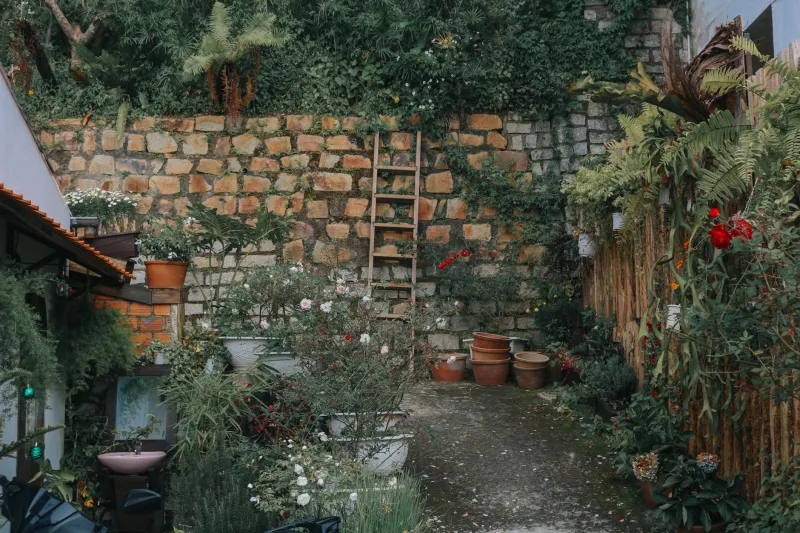
Beyond the Bike Store: Turning a Slim Side Return Into a Genuine Garden Room
Most UK terraced and semi-detached homes come with a side return that never quite asks to be designed. It is the strip between the house wall and the boundary fence: too narrow for a lawn, too shaded for a serious border, and too handy for storing things that do not have a proper home. Yet this forgotten corridor has something that bigger gardens often lack — shelter, privacy and a very short walk to the kettle. Treat it as an outdoor room rather than a service route, and it can quietly become the best seat in the house.
Start with an honest survey of light and damp
Before you buy a single pot or paver, spend a day watching how the strip behaves. Check it in the morning, around midday and again in the late afternoon. A side return that looks gloomy at 9am may catch a decent pocket of sun at 2pm, and that changes where a bench should go. Note which wall stays wet, where leaves collect, and whether water runs towards the house after rain. Also look for the practical kit: air bricks, the damp-proof course, drain covers, manholes, outside taps and downpipes. None of these should be buried or blocked.
Drainage is the make-or-break issue. The ground should fall gently away from the house, and any paving needs a sensible fall — roughly 1:80 is a common target — so water moves to a drain or a planted soakaway rather than sitting in a puddle by the back door. In many side returns, a simple gravel margin or permeable jointing helps, but do not assume it solves everything. If the strip is a known soggy spot, sort out the downpipe connection and surface water first. A beautiful bench is little comfort when your feet are in a pond.
Decide what the strip is actually for
A slim side return cannot be a lawn, a dining terrace, a play area and a bike store all at once. Choose one main job and let the rest support it. If the space is your route to the garden, keep a clear path — around 600–800mm is a realistic minimum for comfortable movement — and use the edges for planting and storage. If it is wide enough for a seat, make that the priority and accept that the bins may need a smarter home elsewhere.
The best side-return schemes usually mix two uses: a short, sheltered sit-down spot and a tidy route through. That might mean a built-in bench at the far end, a narrow walkway beside it, and slim storage tucked against the house wall. The aim is not to cram in features. It is to make the space feel deliberate, so you stop noticing it as a leftover gap.
Keep the paving calm and simple
In a narrow strip, busy paving is a mistake. Small, fiddly patterns can make the space feel more corridor-like, while a single calm surface helps it read as one room. Clay pavers, sandstone planks, smooth concrete slabs or even well-laid gravel can all work, provided the edges are properly restrained and the fall is right. Laying the long dimension of the paving parallel to the house can gently stretch the view, and using the same material as the main garden helps join the two spaces together.
Avoid covering every inch. A strip of planting or gravel at the base of a wall softens the hard edges and gives rain somewhere to go. If you are paving over an old drain cover, keep it accessible with a recessed tray or a discreet liftable section. And do not raise the ground above the damp-proof course. It is the quickest way to turn a design idea into a damp problem.
Plant upwards, not outwards
When floor space is tight, the walls and fences do the work. Climbers are ideal: star jasmine, clematis, ivy and shade-tolerant ferns can green up a side return without eating into the walkway. Use wire trellis, slim planters or wall-mounted troughs, and choose plants that cope with the conditions you actually have rather than the ones you wish you had. A north-facing side return is not the place for lavender and sun-loving herbs.
Evergreen structure matters here because the space is often viewed in winter. A few ferns, a clipped shrub in a pot and a reliable climber will do more than a crowded collection of tender plants. Keep pots narrow and raise them slightly so water can drain. If you want colour, use a couple of seasonal pots near the seating area rather than lining the whole route.
Make the seating feel built in
A side return is one of the few places where a built-in bench genuinely makes sense. A simple timber bench, around 400–450mm deep, can run along a wall or fence without stealing much floor space. Add lift-up storage underneath and you have a home for cushions, secateurs and the odd bag of grit. A corner bench at the end of the strip can create a proper destination, especially if it faces a planted wall rather than a blank fence.
If the space is wider, a small bistro table and two folding chairs may be enough. Avoid deep armchairs and bulky dining sets; they turn a usable route into an obstacle course. Paint the fence or wall a deep, soft colour to blur the boundary, and add a warm outdoor light at head height. The side return is naturally sheltered, so it often works in weather that sends you back inside from the open lawn.
Conceal the clutter without pretending it is not there
Every household has something to store. The trick is to give it a proper place rather than letting it colonise the path. A slatted screen can hide bins while letting air circulate. A narrow, upright bike shed keeps bicycles out of the kitchen. A bench with storage, a slim wall cabinet or a painted tool box can swallow the small stuff. Just keep air bricks, drains and access hatches clear, and make sure anything you build can be moved or opened for maintenance.
Finish with a simple maintenance rhythm
A side return is easy to neglect because you do not sit in it every day — until you do. Sweep it after windy weather, check the drain before winter, and cut back climbers before they creep into gutters or window frames. In dry spells, water the pots properly rather than giving them a daily sprinkle. A little attention keeps the space feeling intentional, and that is what turns a narrow strip from a place you pass through into a place you choose.
In 2026, with many UK gardens feeling smaller and summer weather harder to predict, the side return is a useful reminder that good design is not always about more space. Sometimes it is about looking again at the space you already have and giving it a clear job. A bench, a bit of shade-tolerant planting and a path that works can turn the most overlooked strip on the property into a genuinely pleasant spot to sit.