Let It Grow: Why a Livelier, Looser Lawn Makes Sense in 2026
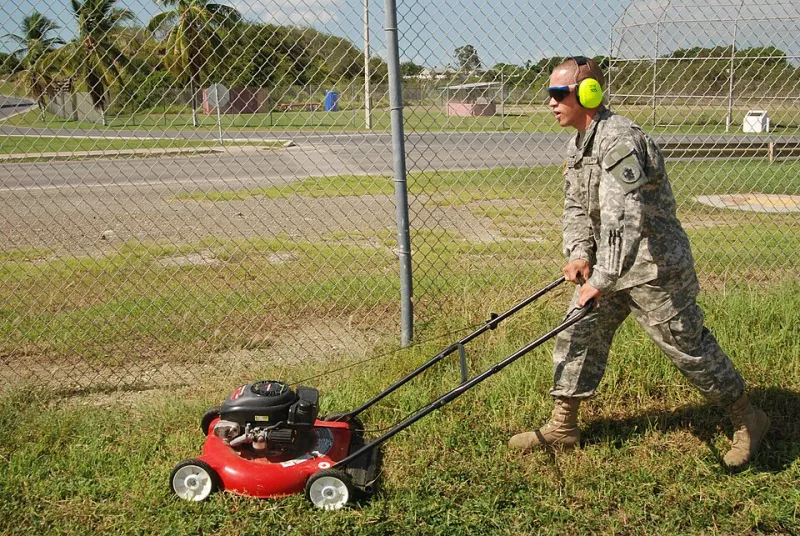
Photo: Staff Sgt. Brian Jopek, Public domain, via Wikimedia Commons
Ask most UK homeowners what a good lawn looks like and you will get the same answer: short, green, neatly striped, and ideally uniform enough to play croquet on. It is a lovely image. It is also, in 2026, increasingly out of step with how many of us actually live, garden, and think about the outside world.
This is not a call to abandon lawn care. It is a call to loosen the grip of the perfect lawn and let a little life back in. A no-mow lawn – or, more accurately, a less-mown, more biodiverse lawn – is not a shaggy patch you give up on. It is a managed, living surface with its own rhythm. And for plenty of gardens, it is the smartest move of the year.
The striped lawn is a habit, not a requirement
The velvety, striped lawn is a relatively recent ideal, popularised in Victorian times and cemented by post-war suburbia. It suited a particular vision of the garden: tidy, controlled, and slightly performative. But our gardens are now asked to do more. They need to soak up rain, cool the air, support insects, and give us somewhere to sit after work without demanding a full weekend of maintenance.
At Future Lawns & Landscapes, we are not anti-mowing. A lawn that is never touched can become rank and difficult. The point is that mowing should be a tool, not a personality test. If your lawn is mostly there to look immaculate from the kitchen window, fine. If it is there to be used, enjoyed, and to do a bit of good, a looser approach is worth considering.
What a no-mow lawn actually does for your garden
A lawn left a little longer is a different habitat. Clover, daisies, selfheal, and plantain start to appear. Hoverflies, solitary bees, and butterflies find food and shelter. Longer grass holds moisture better in a dry spell, which matters more than ever when hosepipe bans and hot summers arrive. It also needs less fuel, less noise, and less of your time.
The visual result is not a meadow in the wild sense. In a small UK garden, it is more of a relaxed tapestry: green base, seasonal wildflowers, a few seed heads, and a softer edge. It can look deliberate and beautiful, especially when it is framed properly. The trick is to make it look chosen rather than abandoned.
The practical wins nobody talks about
Mowing less often saves money on petrol or electricity, reduces noise, and cuts down on green waste. A taller sward shades the soil, so it needs less watering in summer. It also copes better with drought and shade than a closely cropped lawn, which is why many gardeners find themselves pleasantly surprised by how green their lawn stays in August.
There is a time saving too, and it is bigger than people expect. Going from weekly mowing to fortnightly or monthly mowing gives you back hours across the season. That is time for planting, sitting, or simply not doing chores in the rain.
How to go no-mow without going feral
The secret is structure. Keep the edges crisp. Maintain a mown path or a clear border so the eye reads the space as designed. If you have a small lawn, mow a strip around the perimeter and let the centre grow. Use stepping stones, a bench, or a simple clipped hedge to show intent. A lawn that is allowed to grow but is held by clean lines looks intentional; a lawn that simply stops being cut looks forgotten.
Start by raising the cutting height and mowing less often. Do not scalp it and then stop suddenly. Introduce native wildflower plugs or yellow rattle if you want more diversity, but give it time. The first season can look patchy while the balance shifts. By the second year, the lawn often settles into its own character.
A realistic first season
Expect a few rough edges. Some grass will flop, some weeds will arrive, and the colour will vary. That is part of the point. Keep a close eye on paths and neighbours' boundaries, and cut back any thuggish growth that spills where it should not. If you want a more formal look, mow twice a year and leave the rest to the insects.
The bottom line
A lawn does not have to be a weekly obligation. In 2026, the smarter move for many UK gardens is not a perfect stripe but a living surface that gives something back. Let it grow a little. Keep the edges neat. See what turns up.