After the Commute: Designing a UK Garden That Comes Alive at Dusk
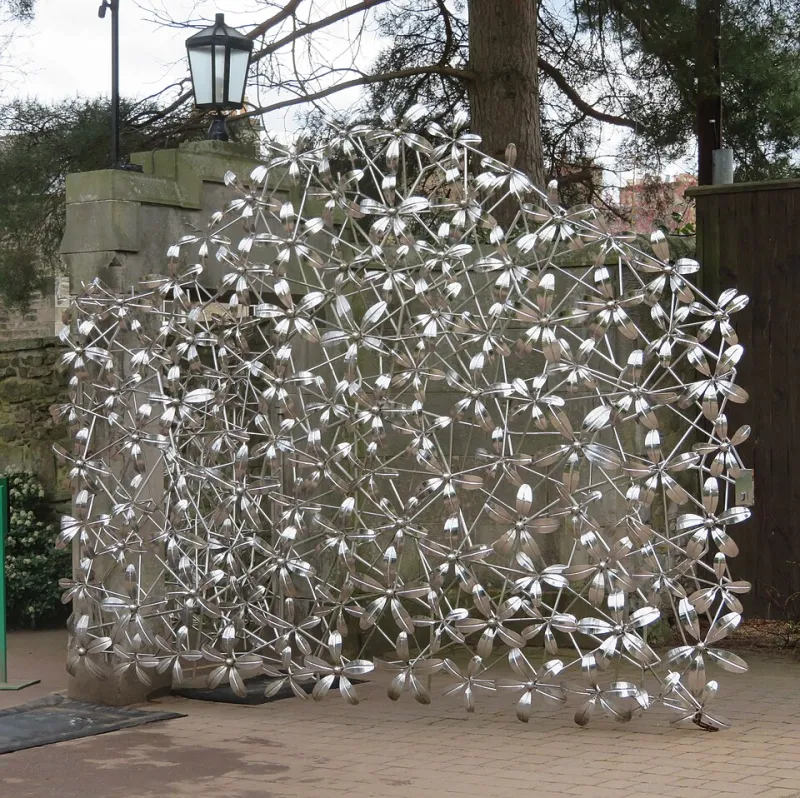
Photo: M J Richardson , CC BY-SA 2.0, via Wikimedia Commons
By the time many of us get home from work in November, the garden has already clocked off. The lawn is a dark shape beyond the patio doors, the borders have lost their colour, and the idea of sitting outside feels like a test of endurance rather than a treat. But a garden does not have to be a daylight-only space. With a bit of thought, it can become the best room in the house after 5pm — provided you design for the way you actually use it.
The mistake is trying to recreate a summer daytime garden under artificial light. A festival-style scheme of coloured bulbs and tangled festoons rarely suits a modest UK plot, and it is not kind to wildlife either. The smarter approach is quieter: pick a few things that matter after dark, light them well, and let the rest of the garden go dark.
Start with where you actually stand
Before buying a single spike light, work out your evening viewing points. Most people use three: the kitchen window, the back door, and the seating area. Stand at each one after sunset and ask what you need to see. Usually it is the route to the shed, the step down to the patio, the table, and one feature — a tree, a pot, a wall — that gives the eye somewhere to rest.
That short list should shape the lighting plan. A common error is lighting everything evenly, which flattens the garden and makes it feel smaller. Fewer fittings, aimed with purpose, create shadows and depth. A dark corner is not a failure. It is often what makes the lit parts look good.
Layered light, not a runway
Good garden lighting tends to come in layers. Low-level path lights deal with safety. A couple of uplights or wall washers add shape. A dimmable light near the seating area handles the practical stuff — finding a glass, reading a label, not tripping over the dog. Warm white bulbs, around 2700K, suit UK gardens far better than icy blue-white LEDs, which make timber look grey and planting look clinical.
Keep fittings weather-rated for outdoor use, and have the cable work done properly by an electrician. Timers and dimmers are worth the extra outlay; they let you set a low evening glow rather than a glaring switch-on. Solar lights have improved, but in a British winter they are often more decorative than dependable, so treat them as a supplement rather than the backbone of the scheme.
Make the route obvious and safe
The evening garden has to work for feet, not just eyes. Paths should be wide enough to walk without guessing, steps need visible nosings or a low light nearby, and slippery paving is a genuine hazard once the damp sets in. Textured porcelain, sandstone, and granite are all sensible choices, particularly where algae can gather in shade.
Avoid lights that shine straight into your eyes at ankle height. Shielded bollards and downward-facing fittings are better than bare bulbs. If you have a change in level, light the edge rather than the middle of the path. And keep the route clear of hose reels, pots, and bins that become invisible in low light.
Shelter is the real luxury
A UK garden can be beautifully lit and still be unusable because of wind. Before you spend money on lanterns, think about shelter. A hedge, a slatted screen, or a pergola with a solid roof can transform a exposed corner into somewhere you will actually sit in October. Position the seating so it backs onto the shelter rather than sitting in the middle of the lawn, and keep sightlines open so the space does not feel boxed in.
A simple canopy or parasol helps with drizzle, but wind protection is what makes the difference on a cold evening. If a full structure is out of budget, even a robust screen at one end of the patio can take the edge off. Just check it does not block the light from your kitchen window or cast the seating area into shadow.
Let scent do the heavy lifting
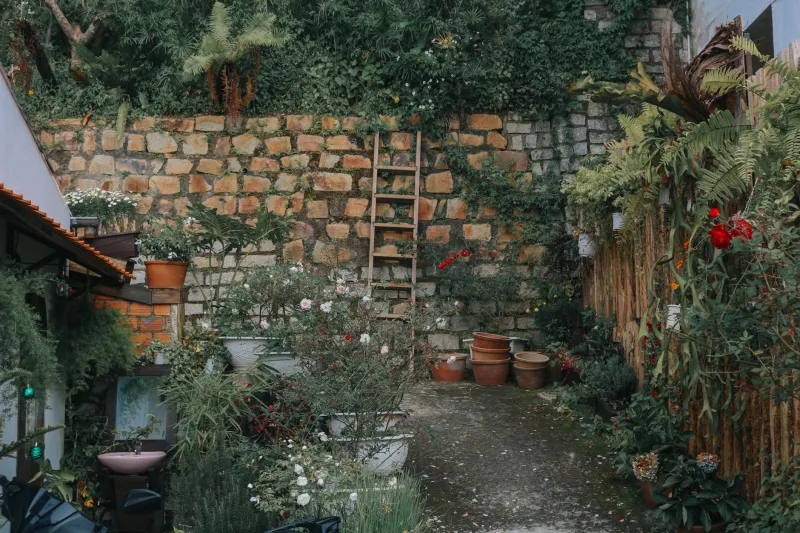
After dark, scent often matters more than flower colour. Plant near the door, the path, and the seating area so you catch it without having to go looking. Honeysuckle, jasmine, lavender, night-scented stock, and tobacco plants are all good choices in the warmer months. In winter, sarcococca, daphne, and witch hazel earn their keep when little else is happening.
Pale flowers and silver foliage also come into their own at dusk. White Japanese anemones, white cosmos, artemisia, and soft grasses catch even a small amount of light and make the borders feel alive without needing to be floodlit. Group scent and pale planting where you pass close by, rather than scattering it across the whole plot.
Keep the lawn and borders simple at night
The lawn does not need to be lit like a football pitch. In fact, a dark, calm lawn makes the lit patio and borders feel more intimate. Keep the edges crisp, because a clean line reads well in low light, and avoid leaving leaves or long grass on the main route. In winter, a lawn that drains well and is not walked on when soggy will look after itself far better than one that is over-managed.
In the borders, think in blocks rather than detail. A few textured grasses, a pale-flowered shrub, and a repeated silver leaf will read more clearly at night than a busy mix of small, dark plants. This is not an argument for a boring garden — it is about editing for the hours you actually use.
Leave room for wildlife
A garden that is bright all night is not a wildlife garden. Moths, bats, and hedgehogs all benefit from dark corridors and unlit corners. Use motion sensors for security lighting rather than leaving a floodlight on, shield fittings so light does not spill into hedges, and avoid uplighting mature trees where bats may roost. Warm bulbs are kinder than cool white ones, and a timer that switches off late in the evening is a simple win.
The night garden should feel alive, not sterile. A little darkness is part of the design, not a gap in it.
A realistic plan for a UK plot
Start with one circuit and two layers: a safe route and one accent. Add shelter before you add more lights. Plant scent near the door. Choose materials that cope with wet winters. Then test the whole thing on a damp Tuesday in November, not a warm evening in July. If you can stand at the kitchen window, see the path, find the seating, and feel tempted to step outside, the design is working. The rest is just tweaking.