Where the Robot Sleeps: Laying Out a Lawn That Automates Beautifully
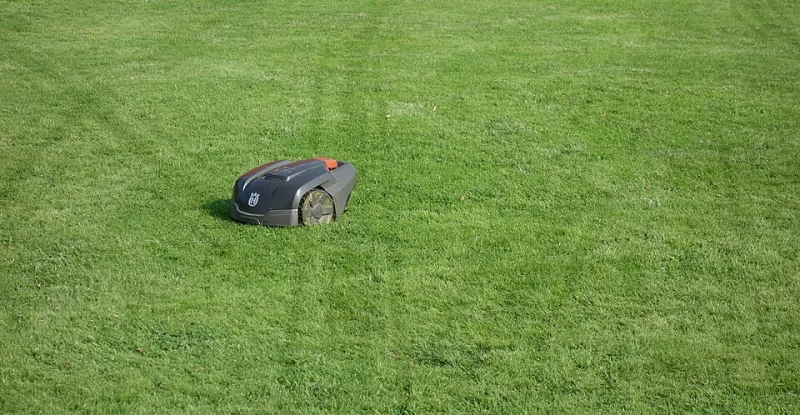
Photo: W.carter, CC BY-SA 4.0, via Wikimedia Commons
Robotic mowers have moved out of the gadget aisle and into ordinary UK gardens. You will see them tucked beside sheds in suburban Surrey, quietly working the lawns of new-builds in Leeds, and parked under hedges in coastal Cornwall. But buying the machine is the easy part. The harder, more useful question is whether the lawn itself is set up to let it do a decent job.
A robot mower is not a magic wand for a tired lawn. It is a small, methodical machine that cuts a little and often, and it rewards a garden that has been thought through. Get the layout right and you end up with healthier grass, fewer weekend chores, and a lawn that still looks like a garden rather than a test track. Get it wrong and you will spend the summer rescuing it from borders, tutting at ragged edges, and wondering why the grass looks stressed.
Start with the dock, not the grass
The charging station is the heart of the whole setup, so place it before you think about seed mixes or stripes. It needs a flat, well-drained patch of ground, close enough to a power supply to be practical, and sheltered enough that the machine is not sitting in a puddle or full sun all day. An outdoor socket installed by a qualified electrician is the sensible route; trailing extension leads across wet grass are not.
Think of the dock as a small piece of garden furniture that happens to have a battery. Give it clearance on all sides, keep it away from tight corners, and avoid tucking it behind a shed where the mower has to thread its way in and out. If the cable run crosses a path, plan that now rather than after the paving goes down. A little foresight here saves a lot of head-scratching later.
Edges are where robots earn their keep, or don't
Every robotic mower owner eventually develops strong opinions about edges. The machine can only cut what it can reach, and it cannot trim a neat line against an overhanging shrub or a raised bed. Aim for clean, flush boundaries: turf meeting paving at the same level, borders with a defined edge, and no wobbly timber that lets grass flop over the line.
Narrow strips are another weak point. If a stretch of lawn is much under 60cm wide, expect the robot to struggle or leave tufts. Curves are generally easier than sharp right angles, and simple shapes beat intricate ones. If your garden has an awkward pinch point, consider widening it, softening it, or turning it into planting. The lawn does not have to be a rectangle, but it does help if it is legible.
Clear the lawn of clutter and obstacles
A robot mower works best when the lawn is treated like a floor rather than a storage area. Plant pots, hose reels, footballs, garden toys, and fallen branches all become obstacles. Some machines map around them; others bump and redirect. Either way, a tidier lawn means a better cut and fewer rescue missions.
Trees and clothes lines are the usual culprits. You can create small, flush-edged islands around permanent obstacles, or simply keep the lawn clear and set the mower to avoid those zones. What you cannot do is expect a pristine finish around a scatter of random objects. A quick tidy before the robot goes out is still part of the routine, even in 2026.
Choose turf for resilience, not just looks
A robot mower cuts frequently, which generally suits grass. Small clippings return to the lawn, moisture is retained, and the sward thickens up. But that only works if the turf is up to it. For most UK gardens, a hardy mix of perennial ryegrass and fescue is a sensible starting point. Dwarf ryegrass copes well with wear, while fescue brings toughness and drought tolerance.
Very fine, ornamental lawns are possible, but they demand more attention. Shady corners need a shade-tolerant mix, and heavy clay needs organic matter and better drainage before any machine can make it look good. A robot will not fix compacted soil or a waterlogged patch. Sort the ground first, then let the technology do its quiet work.
Small layout changes that make a big difference
If you are redesigning or tweaking a garden, a few moves make automation smoother. Level out dips and bumps that catch the blade. Replace a wonky step with a flush one. Give borders a crisp edge. Keep a simple route between zones so the mower can travel without drama. None of this is about designing for the machine at the expense of the garden; it is about removing the friction that makes both look worse.
Mow often, mow gently, and think of the hedgehogs
The best routine is little and often. During the growing season, a daily or near-daily pass keeps grass healthy and clippings short. In dry spells, back off. Keep the blades sharp and the cutting height sensible rather than scalping the lawn.
And do think about wildlife. Robotic mowers have been linked to injuries to hedgehogs, which are already under pressure in the UK. Run the mower in daylight where possible, check the lawn before setting it going, and leave a wilder corner or two that is never cut. A lawn that works with a robot should still work for the creatures that share it.
Get the dock right, simplify the edges, clear the clutter, and choose a tough turf mix. Do that and the robot becomes what it should be: a quiet background helper, not the main event.