The Two-Metre Rule: Designing the Garden You Actually Look At

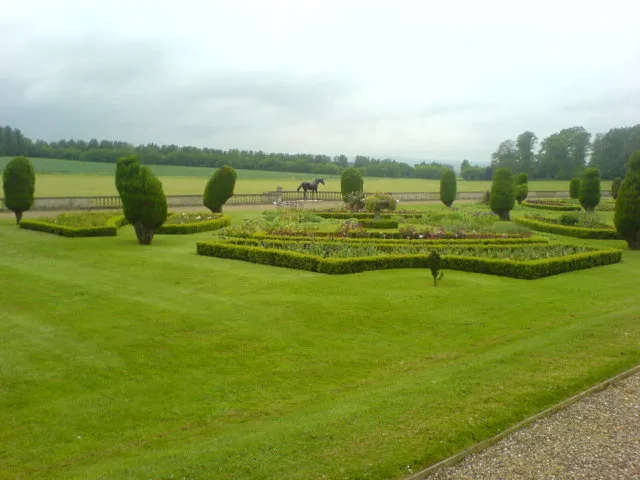
Photo: Patrick Mackie, CC BY-SA 2.0, via Wikimedia Commons
Think about how often you look at your garden without actually going into it. Filling the kettle. Waiting for the toast. Glancing up from the laptop at half four when the light goes gold. Dozens of times a day, probably, and always from roughly the same spot. That view is your garden, in any practical sense. The rest of it is a place you visit at weekends.
Which is why it's slightly odd that so many of us plan a garden from the far boundary inwards. We agonise over the end border, then realise the bit by the back door is a strip of tired paving, a recycling box and a shrub nobody has pruned since 2019.
Here's the alternative: treat the first two metres as the main event. Design the view, then work backwards.
Start with a sightline audit
Before you buy a single plant, do the least glamorous job on the list. Stand where you actually stand. The kitchen sink, the back door, the sofa by the patio doors, the upstairs landing window. Look out and write down, in order, what your eye lands on first.
Most people's lists read something like: bin, fence panel, something dead in a pot, next door's extension. That's not a criticism, it's a brief. Every item on the list is a design decision you've been making by accident. Once it's on paper you can start making it on purpose.
Pay attention to the frame, too. A window is a picture frame, and the view through it has edges. What sits in the corners matters as much as what sits in the middle. A single upright shrub breaking the line of the fence can do more for the composition than a whole border further out.
The close-up zone plays by different rules
Planting that lives within a couple of metres of the glass gets inspected at close range, every day, in every season. That changes what works.
Big blousy drifts of one thing can look wonderful from twenty paces and slightly monotonous from two. Up close, the eye wants detail: leaf shape, texture, the way something catches the light. Think ferns unfurling, heuchera with its ruffled edges, epimedium in spring, small-leaved ivy trained against a wall, a low mound of sarcococca that perfumes the whole doorway in January. Grasses work hard here because they move, and movement in a still winter view is worth a lot.
Scent belongs in this zone almost by default. Anything fragrant should be as close to the door as you can reasonably get it. There's no point having a gorgeous philadelphus thirty metres away with a prevailing wind blowing the other direction.
And repetition helps. Small plants repeated in loose groups read better at close quarters than a collection of one-offs, and they knit together faster, which matters if you're starting from bare ground.
Give winter something to do
For about four months of the year the view out of that window is grey, and it's still the view you look at most. So build in structure that doesn't depend on leaves.
Evergreens are the obvious starting point, but a few well-chosen ones beat a hedge of them. Coloured stems earn their place too: cornus in reds and oranges, willow in acid yellow, both cut back hard in spring and glowing against a wet fence in December. Leave seedheads on things like sedum and teasel. Leave grasses standing until late winter rather than cutting them down in a fit of November tidiness. Frost on a grass panicle is one of the few genuinely free pleasures in a British garden.
A climber on the wall nearest the house is another cheap win. An evergreen honeysuckle, a jasmine, even a well-behaved ivy, all give the window something green to rest on when everything else has packed up.
One focal point, chosen honestly
Every good view needs somewhere for the eye to stop. This doesn't mean a bronze sculpture and a spotlight. It means one thing that holds attention, deliberately placed on the main sightline from the window.
A well-proportioned pot. A bench with a decent back to it. A multi-stem tree with interesting bark, like a birch or an amelanchier, sited so you see it from the sink. Even a bird bath counts, and it comes with built-in entertainment.
The test is simple: stand at the window, squint, and see where your eye goes. If it lands somewhere you didn't intend, that's your focal point, whether you like it or not. Move the pot.
Screen the clutter properly
Nothing undermines a view like a wheelie bin. Bins, sheds, the trampoline, the tangle of hoses by the tap: all of it sits exactly where you look most often, because that's where it's convenient.
Slatted timber screens are the standard answer and they work. So does a tall grass in front of something ugly, provided it's a grass that stands up to winter. Lattice with a climber over it hides more than it looks like it should. But the best solution is often the boring one: move the bin round the side of the house, or build a proper store that ends the argument for good.
Be honest about the small stuff, too. A neatly-edged path and a clear doorstep do more for the daily view than any amount of fancy planting. Clutter reads louder up close than it does from the far end of the lawn.
Keep it manageable
One last thing, and it's the point that makes this whole approach practical rather than aspirational. Concentrating your effort on the close-up zone means you can spend your time where you'll actually notice the return.
A generous mulch of bark chip cuts weeding dramatically. Ground cover does the rest. Fewer, better plants, repeated, will out-perform a crowded border every time. And a path that leads the eye onwards, rather than stopping dead at the fence, makes the garden feel larger than its actual dimensions, which is the oldest trick in the book and still the best one.
Start with the window. Everything else follows.